KEEP CALM AND SAY IT WITH A FLOWER

KEEP CALM AND SAY IT WITH A FLOWER

Weren’t flowers supposed to be a symbol of kindness?

In the week leading up to All Saints’ Day, their beauty clearly isn’t enough to soften the hearts of florists and flower shop owners.

I happened to find the shop I’ve been going to for some time closed, and I was reluctantly let in at another one.

On the closed window of the first florist’s shop a sign that read, “Closed Monday and Tuesday afternoons — reservations for funeral services accepted by October 24.”

The door of the second florist, on the other hand, was open, but “we’re too busy, we can’t handle it anymore; you’re the last one, no one else is coming in. Look at how many arrangements we have to prepare; those flowers are already sold…”

The crescendo of complaints continued until it reached a climax: I was grabbed by the arm “Ma’am, come on, I’m not exhausted, look, look…”

I remained silent.

I couldn’t even manage to say “keep calm,” I was so dismayed; I just wanted to buy some flowers.

I often say that I feel like an alien in this world, but what happened to us?

I fondly remember the florist in the town where I was born and the times I used to go to her shop with my mom. She was always smiling, always full of suggestions, always with one more idea.

And yet she ran the shop all by herself, and she, too, had a young child just like I was.

All of this got me thinking about the language of flowers.

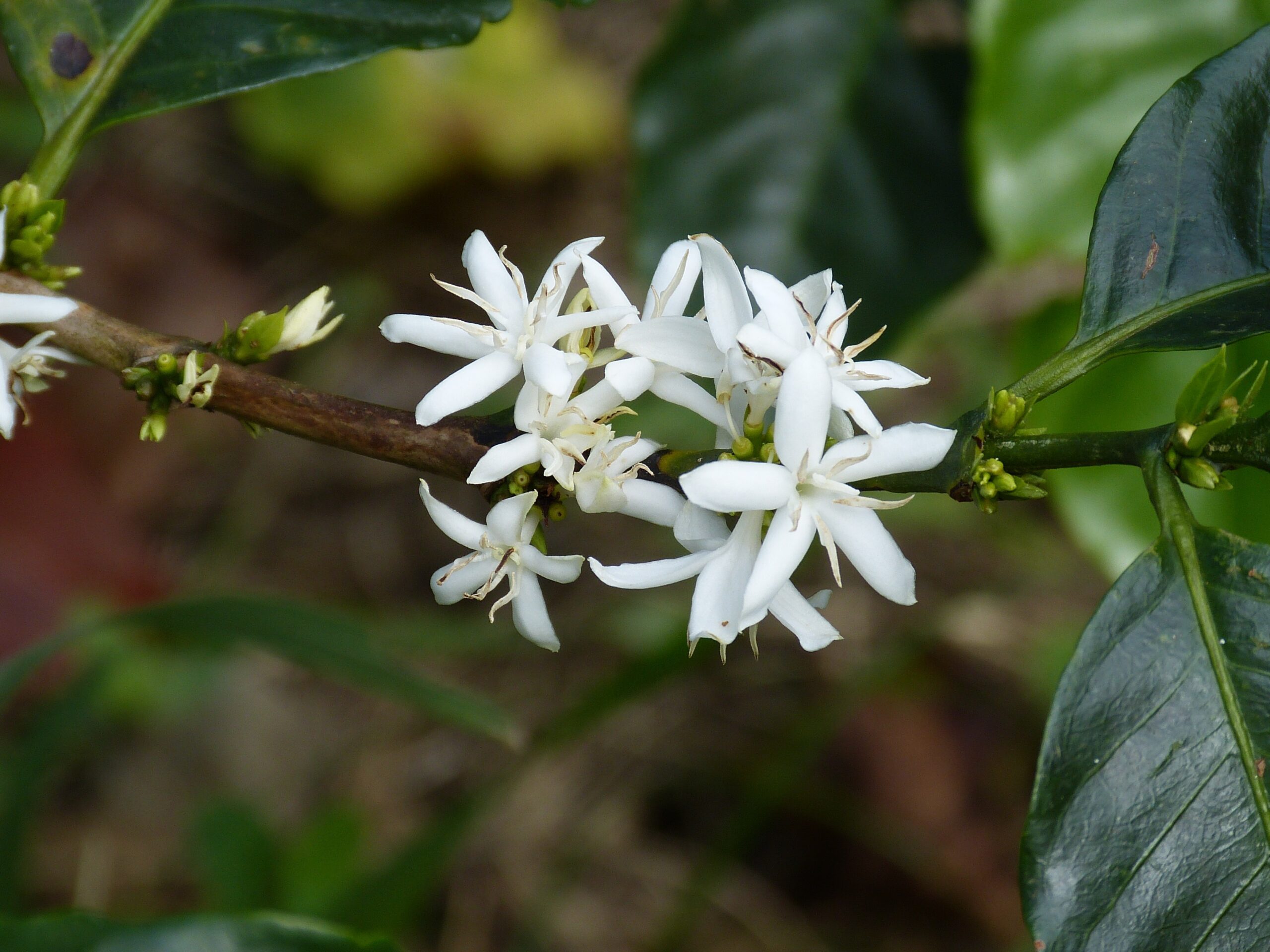
The coffee flower symbolizes vitality, energy, and even strength, precisely because coffee plants grow even in challenging environments far from their natural habitat.

It’s impossible not to think of Karen Blixen and her Out of Africa.

But let’s get back to the language of flowers Hanakotoba 花言葉 in Japanese. What’s your favorite flower?

In the meantime, check out this unmissable “floral” Halloween display, if we can call it that, at the University of Pavia’s botanical garden!

Keep calm e dillo con un fiore

2026_10_31_BotanicSuspiria_Locandina

PACHINKO

PACHINKO

Pachinko パチンコ is the name of something that is perhaps less understandable to Westerners, but only because we have other manifestations of alienation and ludopathy.

Pachinko パチンコcould be synonymous with mockery.

Verbal Kint taught us that the greatest trick the devil ever pulled was convincing the world he did not exist. And like that… he is gone. 

Even gambling in Japan “does not exist” because it is banned. And it disappears under the name “entertainment” definition by which Pachinko is classified.

Many of us have been through a Pachinko parlor running: along with Bill Murray and Scarlett Johansson in the movie Lost in Translation. 


Pachinko is a hybrid game, we could say it is the representation of contamination: halfway between a pinball machine and a slot machine.

The trick is precisely the balls that from the game become the very object of winning but cannot be exchanged for money.

By playing Pachinko you can only get prizes of various kinds: chocoloate bars, pens, lighters, candy, T-shirts, cosmetics, bicycles, shopping vouchers, up to so-called “special” prizes i.e. silver or gold objects enclosed in plastic bags.

These special prizes can be exchanged at points outside but nearby Pachinko Parlours: the TUC Shops = Tokyo Union Circulation. 

I found precise regulations regarding the installation of these phantom vertical pinball machines, but the risk of addiction?

These Pachinko Parlors are places where people are subjected to extremely high noise levels and bright lights.

The players appear to be sitting helpless, completely estranged, as if without identity in the flow of these slow, mechanical movements that cancel out time.

I am very struck by the slogan of a company that runs Pachinko Parlors:

Joy in life

We resolve to bring joy to the lives of our staff, our customers, and society as a whole through our business.

I do not see joy.


I found a survey from which it mainly shows that the Pachinko Parlour is a place to go alone.

A ball weighs 5.4 gr. a one-dollar box contains two thousand balls, so the weight corresponds to kg. 10.8!


I was thinking … with ten kg. of coffee how many cups can we get?  🙂  😉

Archives

Pin It on Pinterest