TERROR AT THE ANTICA CAFFETTERIA

TERROR AT THE ANTICA CAFFETTERIA

Terror at the Antica Caffetteria in Gravellona Lomellina

Unfortunately not the title of a story

I told you about Gravellona in connection with the Mayor cat

I have not yet told you about Gravellona as a town of Art, but I will, sooner or later.

This time, I want to report a shocking news story.

The Antica Caffetteria in Gravellona is a café located along the main street running through the town, a small village, almost an island between the rice fields and the Three Lakes Park

A quiet place. Very quiet.

But on Monday evening between 7pm and 8pm, this quietness was shattered by an insane, unmotivated and cruel act.

At the Antica Caffetteria there are people sitting at tables, but among these people comes a man with black soul.

Perhaps because of a loss at gambling, perhaps because he didn’t like Sambuca, perhaps because anger and malice have mixed together, this man, a Tunisian, starts to go into a rage.

The bar owner, of Chinese origin, urges him to stop, receiving a punch in response.

An altercation ensues, the bartender’s husband intervenes, and after a physical confrontation the man is removed.

However, he reaches his wife sitting in the driver’s seat, pulls her out of the car, beats her too.

Then he gets into the car and heads for the bar.

Yes: you read that right.

This “man” drove his car towards the bar, hitting the people who were sitting at the tables.

The imponderable.

How often do we sit at a coffee shop table?

Terror at the Antica Caffetteria materialised in the shape of a car in the hands of a black soul.

Terror at the Antica Caffetteria turned into pain, an amputated leg, wounds, and suffering destined to accompany the hearts of an entire community and all those who might have been sitting at a coffee shop table one evening in June.

MY BAR, FAMILY, HEALTH

MY BAR, FAMILY, HEALTH

My bar, family, health … this is the recipe that Anna Possi gives us as an example of a centenarian.

Yes: tireless Anna in front of the espresso machine at the Bar Centrale in Nebbiuno on the occasion of her 100th birthday declared:

I don’t want anything, I already have everything. My bar, my family, my health, my brain is fine… What counts is being among people, loneliness hurts.

What can I say! First of all, many many good wishes also from Keep Calm & Drink Coffee and then sincere congratulations for the message that is certainly worth sharing.

Being among people

Do you agree with Anna?

Do you also think that being among people is what counts?

Or do you love solitude

My bar.

Can loving your job, or being able to turn your passion into a business, really be the essential component?

Health.

One more secret to longevity for Anna is to eat little.

I think I can say that we all agree, on the theory, of course on the practice … do you know how to moderate your meals

Between ‘my bar’ and ‘health’: family.

Il mio bar, la famiglia, la salute

Family:  a word that in a broad sense encompasses a universe, so varied and multifaceted that it cannot fit into a specific description.

It is no coincidence that countless quotations are striking in this regard:

I do think that families are the most beautiful things in all the world!
Louisa May Alcott

A happy family is, but an earlier heaven.
George Bernard Shaw

The family will last as long as man. It is the cradle of humanity.
Giuseppe Mazzini

Rejoice with your family in the beautiful land of life.
Albert Einstein

In family life, love is the oil that eases friction, the cement that binds closer together, and the music that brings harmony.
Friedrich Nietzsche

And in your opinion?

COFFEE PRICE

COFFEE PRICE

No doubt that coffee price has risen.

Wherever and in whatever way you buy it.

In particular we are paying seven euros more in a short time.

Considering this, my husband set about calculating the difference for us who with a kilo of coffee go over 142 cups on the basis of seven grams each, comparing the cost today and the cost six months ago.

il prezzo del caffèil prezzo del caffè

In general, a controversial and very popular topic is the hypothetical new price of the cup at the café: two euros.

How does price get there?

Lu had already pointed out to me a whole repertoire of common discontents, expressed in more or less colourful ways.

I am very interested in your opinion as a consumer, what do you say?

I thought to consult industry insiders and experts, and I would like to take this opportunity to thank everyone again.

ALTOGA: National Association of Coffee Roasters, Coffee Importers and Food Wholesalers sent me the link to their press review that you can find here

Click then for the file on

comunicato stampa Altoga

The opinion of Martina Mazzoleni, marketing specialist at Caffè Ernani is as follows:

The price of espresso in the next 5/10 years willy-nilly will reach € 2.00, for the following reasons:

  • Increase in the price of the raw material i.e. green coffee, from 2019 to today the price has increased on average by 400%, some coffees have seen peaks of even 600% more.

  • Climate change: there will be more and more people asking for coffee, but there will be less and less coffee available. And by the law of supply and demand when there is more demand and less availability of a resource, the price goes up, it is economics.

  • If we want a fairer catering industry, prices must be increased. We often complain as citizens about the low wages in the restaurant industry (and I am not referring to those who hire non-compliant, etc., those are not entrepreneurs to me), but precisely about the too low wages with the industry’s collective bargaining agreements.

  • Skyrocketing running costs, if in the past it cost X to run this kind of business, today it costs X times 2, so twice as much.

  • Increased shipping costs, it doesn’t look like it but even shipping costs in the best cases have doubled, in the worst cases they have quintupled, so there must be a higher mark-up at the end to be able to pay them.

  • Wars, which created problems precisely because of the previous point, shipping.

  • Pay fairly at origin too, if we want to stop exploiting farmers and pay the right price for green coffee, we must also raise prices to consumers.

  • Apart from Italy, no country still has coffee prices this low, we are lagging behind.

  • With the entry of the new EUDR, even less coffee will be allowed to be imported into Europe, so even higher prices are expected in 2025.

Finally, I understand that consumers rightly cannot afford too high coffee prices, but this is a problem of wages that are not being raised by the state at national level, not of the baristas or coffee roasters who in the last 4 years are simply trying to survive the worst crisis our sector has seen since coffee became a global commodity, i.e. since the 16th century.

Giulia Spinoni of IEI Italian Espresso Institute provided me with a document with an emblematic title: no to instrumentalisation.

Click for the press release

Istituto Espresso Italiano

Trieste Coffee Association you already know it: we talked about the unofficial capital of coffee

Once again I would like to refute the alleged coldness of the north-east: once again I had the privilege of finding maximum availability and exquisite cordiality.

The president: Arianna Mingardi is among those women with whom one is immediately on the same wavelength, where it is the value of people that counts.

I contacted the association in a particularly fervent period for Trieste, so I say stay tuned because we will have the opportunity to chat further on the subject.

To stay for now on the coffee price issue: the president explained to me that, starting with the raw material, i.e. raw coffee, the increases have been slow but continuous, in step with adverse weather conditions.

However, it is not only the price that has risen: consumption has also increased significantly, especially from countries that previously did not consume coffee.

The logistical situation is also very difficult, due to very long waits for transit through the Suez Canal, or alternatively, the circumnavigation of Africa.

Even considering the real speculations that affect this as well as other sectors, the main thing that emerges is the attention paid to the protection of a supply chain that affects the entire territory at various levels, aimed at making coffee a valuable beverage.

Before concluding, I would also like to issue an invitation to our Laura from Al tavolo di Amalia to get the point of view of Naples: what about suspended coffee at the price of two euros?

KEEP CALM AND POTA

KEEP CALM AND POTA

Keep calm and pota!

Don’t say you’re not already smiling thinking to Keep calm and pota.

I immediately lit up, also because Keep calm and pota is curated by Piöcc’s Café.

Café! A coincidence, or rather, I would directly say a sign.

A sign that I immediately grasped when I contacted the Teatro Centro Lucia in Botticino Sera.

Yes, you read that right: theatre.

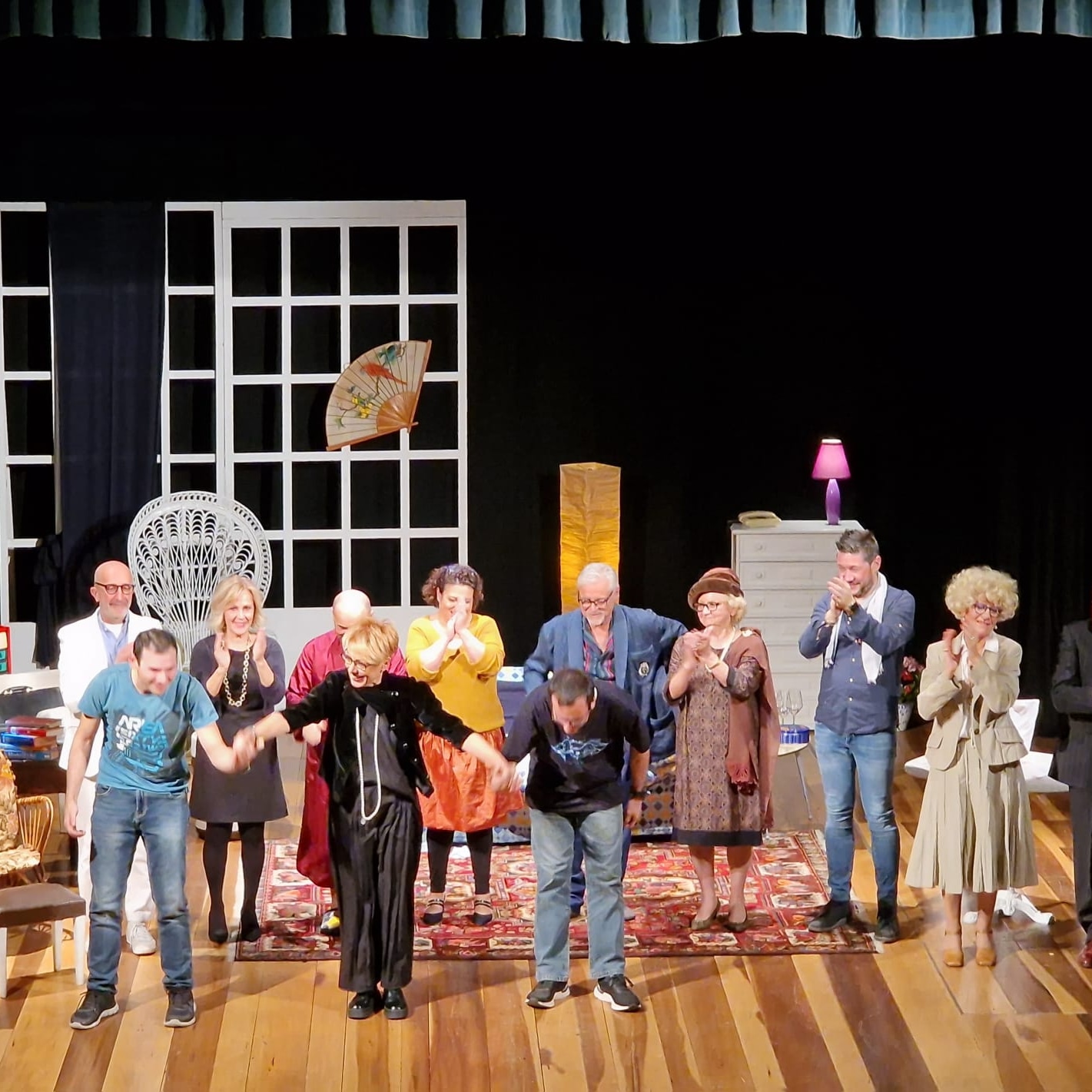
Elena kindly explained that their artistic direction in recent seasons has been proposing a review of dialectal comedies from the Brescia area entitled ‘Èl bel del dialet a teàter’.

As I have already mentioned, I am very fond of dialect

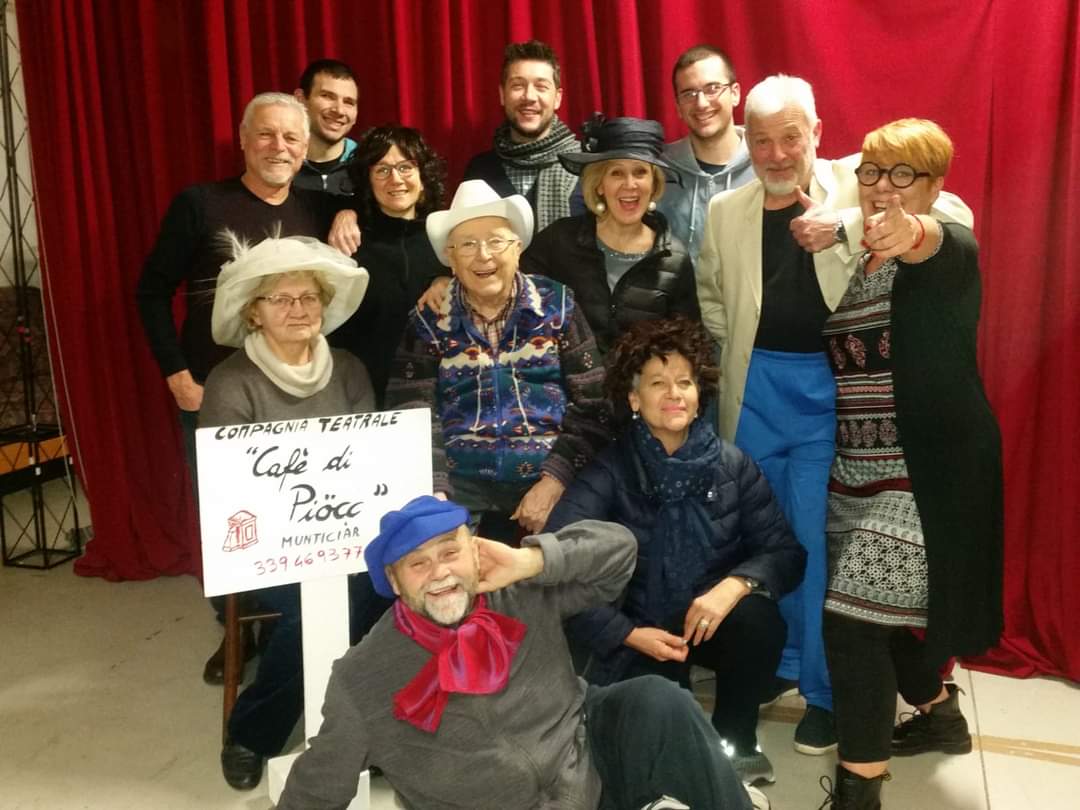
Keep calm and pota is therefore a dialect comedy, and Cafè di Piöcc a theatre company.

Elena also helped me contact the director: Manuela.

In two words: a revelation!

Quoting Queen Agatha:
A clue is a clue, two clues are a coincidence, but three clues make a proof.

Keep Calm, Coffee and Friendship

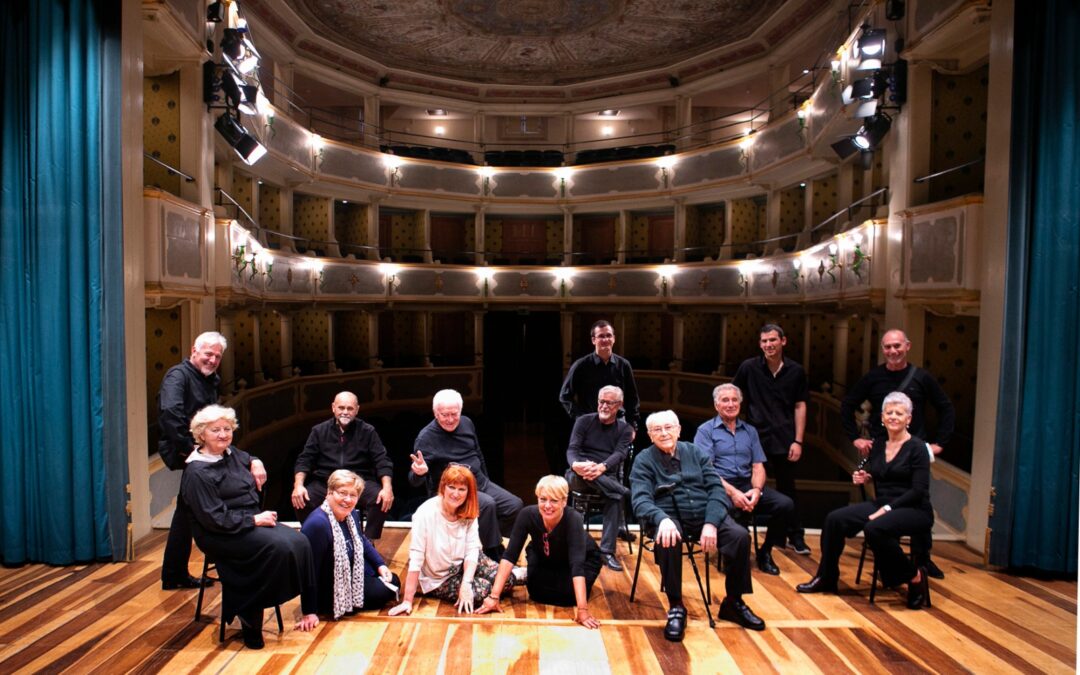
The founders of the Café di Piöcc are three friends who meet in the parvis of the cathedral church in Montichiari.

Money is tight and friends watch the gentlemen eat pastries and drink wine, but they can only afford water from the fountain: the Café di Piöcc then, that is, the poor man’s café.

At Cafè di Piöcc, stories, gossip and historical facts are told.

From these tales, one of the first theatre companies in Brescia was born in 1970, a troupe that was also the subject of a university thesis.

Manuela joined the company, gradually performing various tasks: props girl, prompter, actress with a small part, assistant director.

Until one evening in the rehearsal room she picked up a book from which an envelope came out with a letter that no one had ever seen.

Destiny, magic, what would you call it?

In this letter, Beppe Boschetti, one of the three founding friends, had expressed his wish to leave the company in Manuela’s hands.

A story made up of people, a long journey made up of extremely remarkable theatre works such as I tre innocenti (The Three Innocents), inspired by news events, or Semplicemente donna (Simply Woman): a red chair and 49 changes of clothes representing the stages of life up to menopause.

And yet settings and periods vary while the common denominator remains the titles that are idioms, e.g. Petost che peji l’è mei insi or Ogné come la sàpes stada.

All the way to Keep Calm and pota.

Pota is the word that unites Brescia and Bergamo, an intercalary that, pronounced with the typical accent, is always very nice.

The author had the intuition to combine pota with the expression keep calm, linking up with Freud’s truth, the female Ego interjecting itself with the Super Ego, and communicating a message: love wins.

Speaking of messages, the Cafè di Piöcc also collaborates with the municipality of Montichiari for social work with the Legality in short project. 

It can therefore be said that Cafè di Piöcc keeps calm but is unstoppable!

Many many compliments and a special thanks to Manuela Danieli.

TRIESTE COFFEE ASSOCIATION

TRIESTE COFFEE ASSOCIATION

Trieste Coffee Association is one of the few associations still active and is third in Europe.

Staying on the trend of coffee in Trieste it was really very interesting to learn more about the supply chain.

For this I must say THANK YOU to Fabrizio Polojaz President of AssoCaffè Trieste for the availability and courtesy with which he illustrated every single aspect that connects Trieste to coffee in a total way.

COFFEE FOR TRIESTE IS HISTORY

Trieste has always been a harbor city, as we know it is not remembered as particularly influential: we rather know the magnificence and power of Venice. But between 1710 and 1720 Trieste found “a protector:” Vienna. The Austrian Empire has become a continental empire and decides to create its own merchant port in Trieste.

At the end of 1700, with the sunset of the Serenissima the second important step: the competition was interrupted.

Third crucial point: the construction of a “southern” railway (with respect to Austria), to allow goods unloaded from ships to leave by train to arrive in Vienna within a day.

The fourth important progress takes place with the construction of the Suez Canal: the entrance into the Mediterranean no longer requires the passage through the Pillars of Hercules, and, directly from the Aegean, the way to Trieste is short, as well as favorable.

Even today Trieste is the northernmost harbor in the Mediterranean.

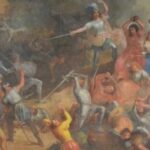
Here you will find an original print from the Dino Cafagna collection illustrating Triste in 1719 before the free port.

COFFEE FOR TRIESTE IS A PRODUCTION CHAIN

As we all know, coffee is not grown in Europe, but grows in the tropical belt: equatorial Africa, Asia, India, Central America and South America.

I quote the words of the President Fabrizio Polojaz:

these goods create knowledge, knowledge creates profession and profession creates supply chain.

This chain begins with the financial part: that is, banking institutions for the purchase, and insurance companies with very specific policies.

Logistics plays an essential role starting with the forwarding agents because obviously we are talking about long-distance transport, but it also includes warehouses for conservation, processing for the improvement of the raw material, and phytosanitary management.

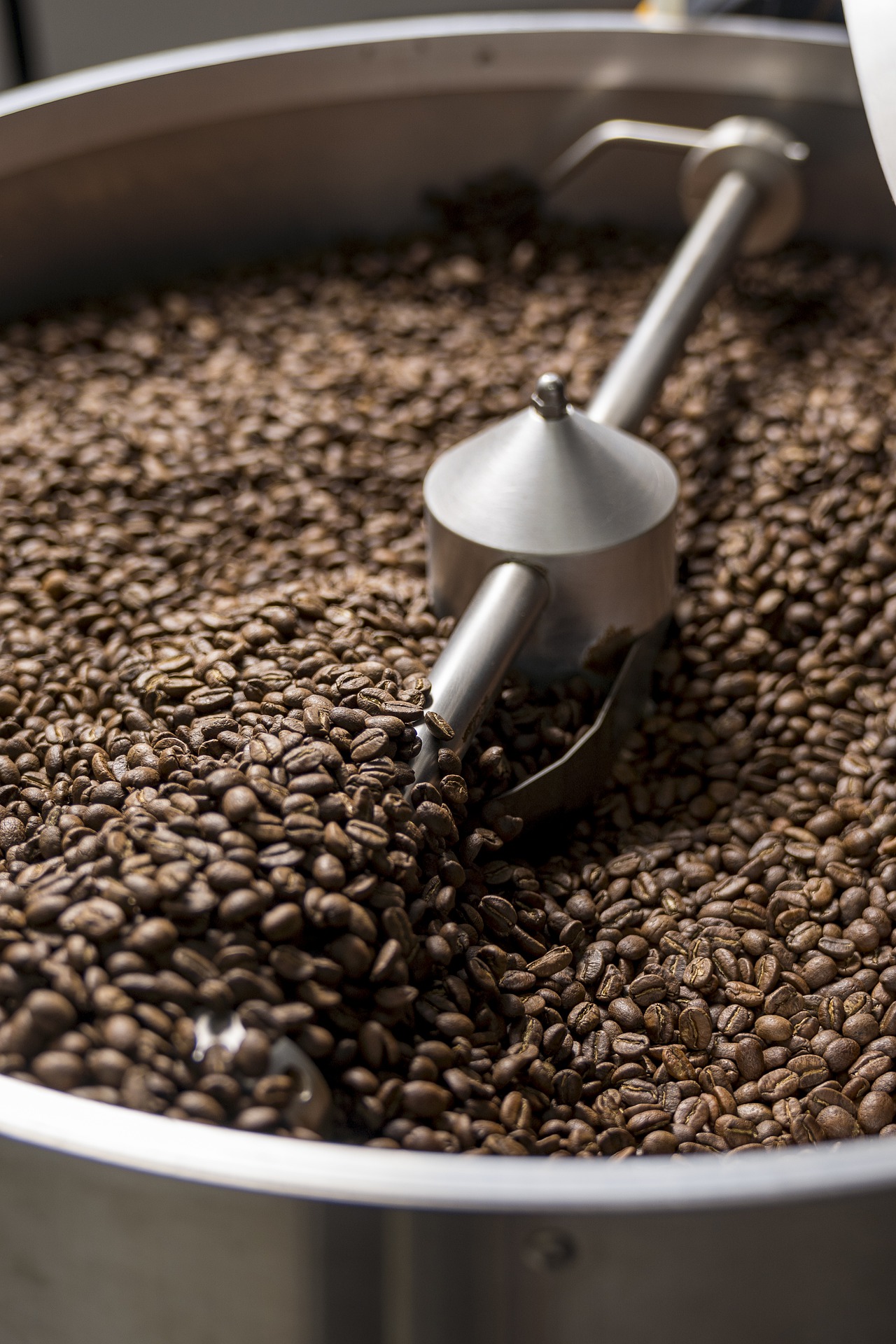
A first transformation is carried out by the roasting companies, which are about fifteen in Trieste.

There is also an industry for decaffeination (there are only nine in all of Europe).

And also chemical laboratories, tasting, experts, training schools and various equipment sector.
COFFEE FOR TRIESTE IS A MEETING POINT

Three European language families:

Latin
Slavs
Germans

three preparations:

for Italians moka and espresso
for Nordic filter coffees
for the Balkans, Turkish and Greek coffee

again, I quote the words of President Fabrizio Polojaz verbatim

People from Trieste are spoiled consumers, and lovers of good coffee.

And again, paraphrasing Nino Manfredi’s historic and unforgettable commercial

coffee is recharging, even spiritual and if the coffee is not good … what pleasure is it?

How can we disagree?

Among other things, it must be said that Trieste consumers are not only “spoiled:” compared to a national average per capita consumption of about 5 kilos per year, the Trieste average reaches almost 10!

Not bad really.

But what’s even more fantastic is theirs… how can we call it?

Nomenclature? I would say no: it’s not exactly technical terminology.

Code? Nor, code is too “mathematical.”

Peculiarities? But it sounds not very poetic to me.

In short, they have their special habit, of asking for a NERO when they want to order an espresso at the bar, just as Nick also told us in the comments about his professor.

When I asked the President Fabrizio Polojaz if there is a particular reason for “nero” he replied simply: to fondle.

However, it is not just a question of nero, apparently the bartenders in Trieste have something more to learn than the others: are you ready?

The typical cappuccino does not exist in Trieste.

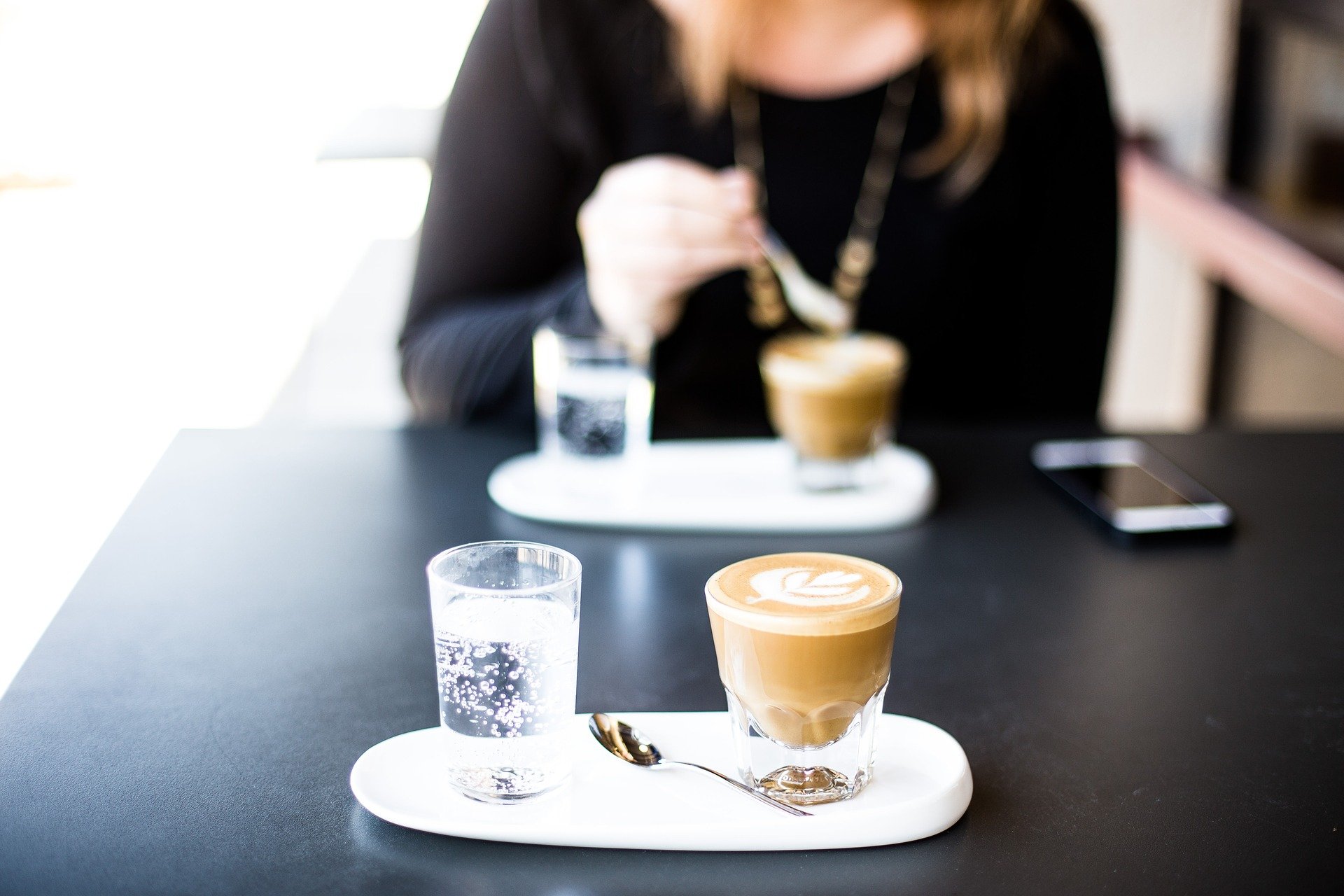
For the milk and coffee drink we are used to thinking about, we order caffellatte.

CAPO, is also shortened in size: small cup or glass.

But if it were a glass, then it would be CAPO IN B, obviously, right!?
Don’t you immediately feel like trying, even considering what Luciana told us here

Finding ourselves “at the cafe,” it is natural to ask for an opinion also regarding the increase in the price of coffee, so much criticized almost everywhere.

In this regard, the President of Assocaffè Trieste invites us to take a look behind the scenes.

The cup represents a series of very long steps: after cultivation, the coffee is stripped, processed, kept in silos, treated in parchment, bagged and shipped.

At its destination, further selections are made, it is roasted and blended, because the coffee is the result of the composition of different qualities, before reaching the barista who grinds and presses it.

All these are the items that make up the bill.

The last two years, so difficult for everyone and everything, have been problematic from the point of view of cultivation, which has suffered production drops caused by the difficulty of harvesting the coffee at the right time.

And there is not only a shortage of good quality products, there is also logistical difficulty, both in terms of traffic: after the long period of inactivity everyone wants to ship, and in terms of costs that have literally increased tenfold.

But the considerable decreases in consumption and, last but not least, the organizational and managerial burdens that the barista had to adopt to fulfill the requests of the various DPCMs were also affected.

So it is worth defending quality and work, do you agree?

COFFEE FOR TRIESTE IS ALSO TOURISM

In addition to the historical cafes already mentioned that offer a unique experience to visitors, Trieste is organizing a coffee festival: the Trieste Coffee Festival, in addition to the professional Triestespresso Expo exhibition, and in particular the Coffee Trieste Association is working with tour operators.

The goal is to ensure that the knowledge they have gained, so deeply rooted in the territory, and characterized in full, can also be enjoyed by tourists.

Among other things, it is already possible to organize visits to coffee roasters to discover this important stage in coffee processing, for example.

What do you say at this point?

They can truly say they are the capital of coffee.

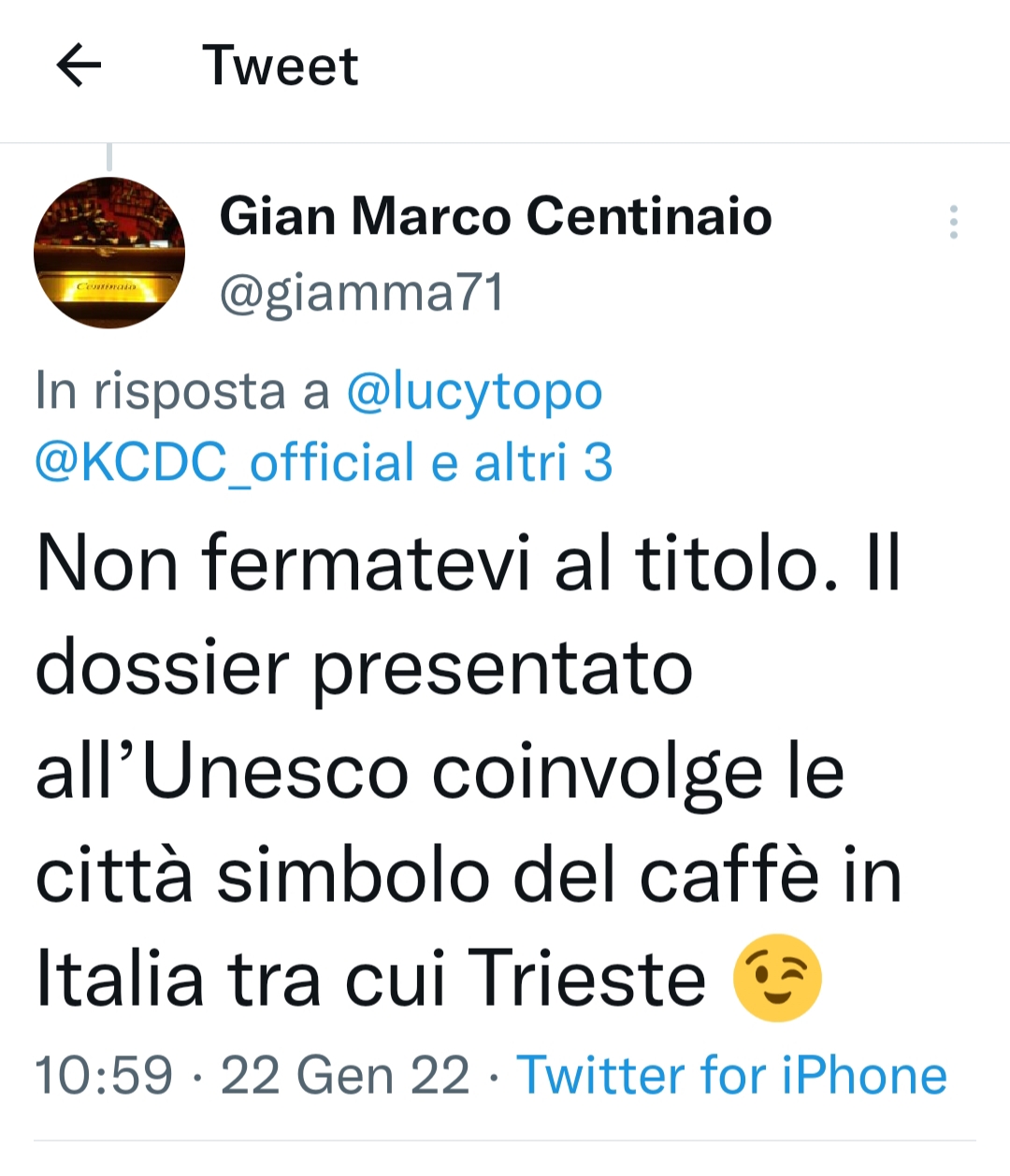
Although, rightly, Minister Centinaio in response to the tweet wrote that the dossier presented to Unesco involves the symbolic cities of coffee in Italy, including Trieste.
Archives

Pin It on Pinterest