SURVEILLANCE PRICING

SURVEILLANCE PRICING

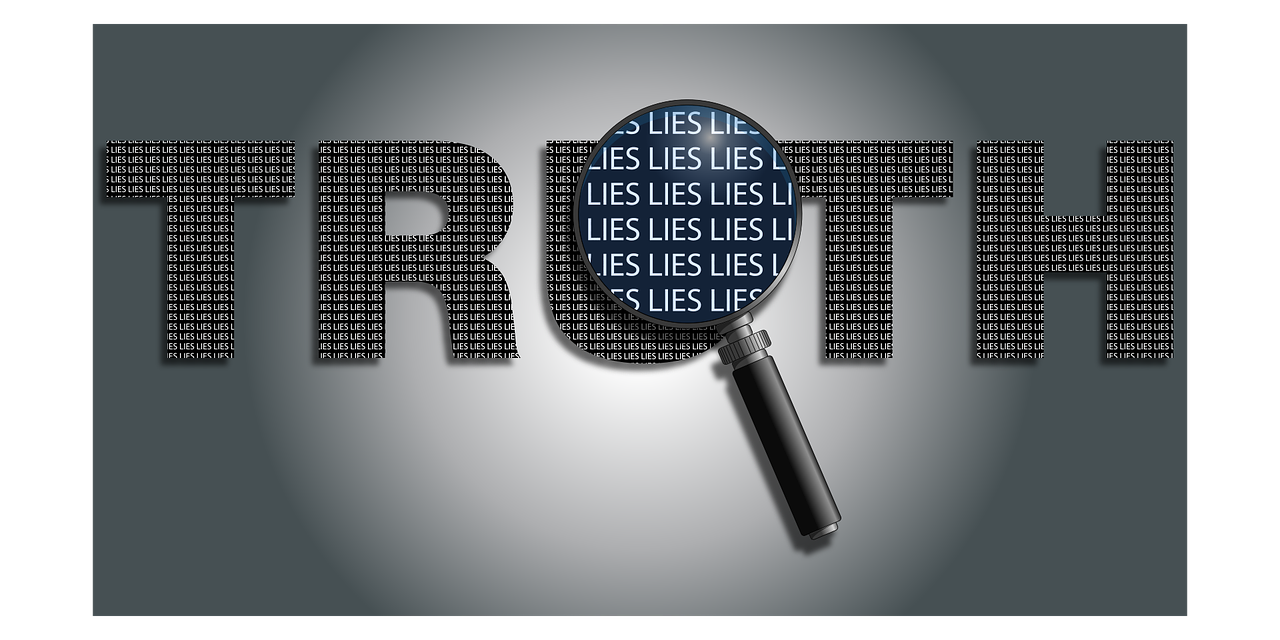
Surveillance pricing can be translated as “profiling pricing.”

Surveillance pricing stems from the use of algorithmic pricing to implement dynamic pricing.

While dynamic pricing has been a long-standing practice, the use of artificial intelligence allows it to be applied on a large scale with extremely targeted adjustments.

How? Through all the information we provide daily that allows our behavior to be analyzed: preferences, search queries, habits, and even spending power.

It’s personal data that sets prices based on the amount a company believes an individual consumer is willing to spend.

Potentially maximizing profits.

So, while we used to resign ourselves to the idea that airfare would rise on certain dates, now the cost of a flight can increase just for us if we’re searching for it urgently.

I don’t know about you, but to me, this looks less like the law of supply and demand and more like blackmail, am I exaggerating?

And while lawmakers are considering a ban on this practice, we continue to fail to realize that we are the product.

It all started with a reply to a tweet from a consumer who was complaining to JetBlue after a disproportionate increase in the ticket price.

He needed to fly to attend a funeral.

The customer service reply, which was later deleted, included not only condolences but also a piece of advice:

delete cookies by clearing your cache

or

browse in incognito mode.

Surveillance pricing

This led to a class-action lawsuit, but in my opinion, the issue is far more troubling.

What do you think about these personalized shopping experiences?

The Federal Trade Commission announced the launch of a public consultation on an enforcement policy statement regarding personalized pricing.

The public will have until September 18, 2026, to submit comments electronically.

Looking at the issue from the other side: do you like to haggle to get lower prices?

Do you usually ask for discounts?

In fact, for some people, haggling is a must, but where is this leading us?

ISCHIA AND ITS DOCTOR PAGLIUCHELLA

ISCHIA AND ITS DOCTOR PAGLIUCHELLA

First of all, I would like to thank Laura Mattera Iacono, author of the book Ischia and Its Doctor Pagliuchella, published by La valle del tempo  for the copy of the book.

Ischia is Laura’s “home,” and Dr. Pagliuchella is Agostino Mattera Iacono: her father.

I loved this book.
Those of you who follow me know I don’t say this often, but this time I had the opportunity to discover a story that is as true as it is precious for what it represents.

We’ve already gotten to know Laura together as the translator of Bergsøe’s books: The Singing Stone and The Lucky Family. 

In describing the Doctor of Ischia, Laura also tells her own story, with the stern judgment of someone who grew up with a great man as a father.

Setting aside generational differences, there’s a lot of Agostino in Laura: that total, all-consuming commitment to doing every task to the best of her ability.

It is extremely difficult to “capture” a figure like Dr. Mattera Iacono: the kind of doctor we’d all like to meet.

Yet Laura has managed to be measured and ruthlessly honest, letting her father’s actions speak for themselves.


An example for us all and an important message to pass on: the aspiration of a man who never stopped thinking about young people.

Ischia and its Dr. Pagliuchella, the story begins right from the title.

Ischia, the hot springs, the treatments seen as opportunities for research aimed at providing the best possible health and therapeutic care.

Ischia, the island that has transformed over the years.

The chapter that, in my opinion, perfectly captures the essence of Ischia’s transformation, and of our lives in general, is “The Beach.”

I recommend you discover it for yourself and continue following Laura through her blog Al tavolo di Amalia. 

I’ll conclude by quoting a piece of advice from Dr. Agostino Mattera Iacono: per aspera ad astra.

KILLER PANTS

KILLER PANTS

Killer pants? A slightly bold claim, a trend, or rather, I’d say more of a fad.

I really hope this whole “killer pants” thing has gone viral, perhaps because something got out of hand, as they say.

It seems that the web is flooded with videos and photos of girls who have fallen because of a particular kind of pants produced by a well-known brand.

As you can see in the photo, these are loose-fitting, soft pants that look anything but treacherous.

I would have classified them as comfortable.

A version of the famous palazzo pants.

How can you not immediately picture those very distinctive ’60s looks? More precisely, they were called “palazzo pajamas” because they were paired with shirts or blouses made of the same fabric and color.

Although, in reality, wide-leg pants are perhaps the ancestor of classic trousers, as they were a precursor in an era when clothing for women that didn’t include a skirt was still unthinkable.

Going back in time, we can look to Coco Chanel, just to name a huge icon and her high-waisted wide-leg pants during the war years: no longer just for horseback riding or the beach.

Other icons of the pants look include Marlene Dietrich and Greta Garbo; here you’ll find some of Katharine Hepburn’s outfits.

Why haven’t these mass incidents ever occurred?

If I may venture a hypothesis, clothes used to be strictly made-to-measure; later, with the advent of ready-to-wear, at least the length could be adjusted, either with the help of a seamstress or even on one’s own.

Do you know how to sew a hem?

Could it be that it’s now acceptable to step on a pant leg that falls under your shoe? I’m just asking.

There are so many styles and fabrics, here’s a selection from Vogue. 

So what could be particularly dangerous about that specific style?

While I wait for you to tell me your opinion, I’ll wrap up by mentioning that my husband gave me a pair of pants in that exact style, they’re striped with a peplum, and the belt loops are wide enough that I could even use a twilly instead of a belt.

Let’s hope we don’t fall… you know I love mystery novels and thrillers, but killer pants? Not so much 🙂

I WOULD HAVE GONE CRAZY IF

I WOULD HAVE GONE CRAZY IF

I Would Have Gone Crazy If is Alessandro Depegi’s most recent piece.

I’ve already told you about him, he’s a writer and blogger, when I read his book Tutto Vero. 

Thanks to his blog, Quarchedundepegi’s Blog, a friendship was born and allowed me to learn so many things.

Quarc turned ninety in May, I’d say that fact alone is enough to give you an idea of the wealth of experience he loves to share.

I’ve learned more about history from him than I did in all my years of schooling; Alessandro is also an anesthesiologist and has a wide range of expertise gained in other fields.

I read I Would Have Gone Crazy If, a collaborative work by two Fugadapolisti, which underscores the importance of being viewed as individuals rather than cases, or worse, numbers.

If there is one certainty in the world, it lies in diversity: just as I find equality in rights essential, I also believe that we are not merely flesh and blood, we are not armies of clones, but microcosms of cells that take on entirely personal characteristics.

The image summarizes the story of Alessandro and his wife, but it also vividly illustrates how many branches and diversifications can arise as a result of individual events.

At the center: a heart. 

Alessandro Depegi describes I would have gone crazy if as a “booklet” and hopes it will be shared; for those who are not yet familiar with Quarc, you can find him here. 

OBSESSION

OBSESSION

We watched Obsession on our son’s recommendation.

Horror isn’t realy my thing, although this isn’t your typical horror movie. 

When we watched it, I didn’t know anything about it; it was only later that I discovered how hugely successful it was: something like $500 million on a budget of $750,000.

In fact, even without knowing any details, by the end you’re left with a simple yet very effective message conveying.

This movie opens up a whole range of discussions and lends itself to a conversation about universal themes.

And then there’s a spotlight shone on the long-standing issue that urgently needs to be finally addressed in all its reality.

Although, to be honest, I was already annoyed by the very first scene.

No spoiler if I say that the object you see in the image above, with all its cheap-looking gadget vibe, is actually magical and has the power to grant a wish.

A single wish.

We grew up hearing the three rules of Aladdin’s Genie: he cannot kill anyone, he cannot make anyone fall in love, and he cannot bring the dead back to life.

Obsession

The One Wish Willow grants only one wish in the lifetime of the person who makes it, with the caveat that the wish will end only with the death of the person who made it.

Here’s the crux of the matter: if you found yourself thinking about what you’d like to see come true, would you also consider the consequences? 

Director Clive Burker encapsulates this concept in his two main characters.

His bio describes him as an Alabama-born Generation Z director who got his start making horror short films on YouTube.

In 2026, he broke into the studio system with Obsession for Blumhouse and Focus Features.

Michael Johnston plays Bear, while Danielle Fabiola Inde Navarrette plays Nikki.

Inde Navarrette was a Call of Duty streamer on Twitch, and in this role, she demonstrated great acting ability by embodying Nikki Freaky, her obsessive and uncontrollable alter ego.

The director himself summed up the frustration of the real Nikki in a metaphor: experiencing everything as if you were sitting in the back seat.

So the ingredients are firmly rooted in the web: YouTubers, streamers, horror, and obsessions…

Tony’s blog mentioned it in his June list; and you? Have you seen it?

Archives

Pin It on Pinterest